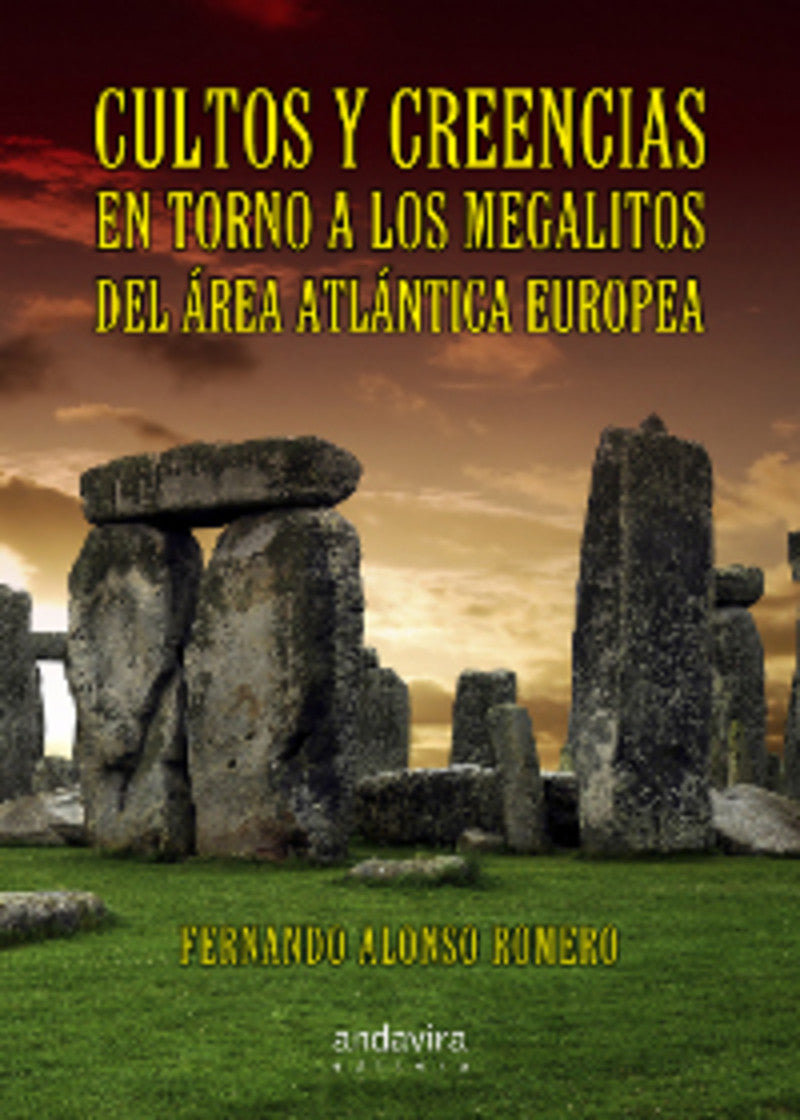
Fernando Alonso Romero
Cults and Beliefs Surrounding the Megaliths of the European Atlantic Area
Cults and Beliefs Surrounding the Megaliths of the European Atlantic Area
Couldn't load pickup availability
Share
In relation to this topic, it is significant to discover that after analyzing more than eighty Tartessian inscriptions from the 750-450 BC period, it has been confirmed that their vocabulary belongs to an ancient Celtic language. These are the first records of this language to appear in Europe. The entire area west of the River Anas (Guadiana) was inhabited by Celtic peoples as early as the Bronze Age; which means that the arrival of the Celts in England and Ireland must also be pushed back (Koch, J.T. 2009). The first news we have about the Celts of the Southwest of the Iberian Peninsula comes from Herodotus, who around 430 BC states that the Celts live beyond the Pillars of Hercules, near the Cynesians. And it is precisely in this world of Western Europe where the builders of megalithic monuments settled, around which countless legends and traditional beliefs were born, many of which have survived to this day, as you will see in this book.
TABLE OF CONTENTS:
Introduction.
Origins.
Megaliths and their meaning.
The purpose of menhirs according to folklore.
Wandering stones.
The concept of time in megalithic folklore.
Imaginary beings and megaliths.
The treasures of megaliths.
Fertile and healing stones.
The genesiac properties of water in megaliths.
The rain menhirs in Galicia.
Water cults in Galicia and other European communities.
Resonating stones.
The stones of the Sacred Promontory.
The transition from the ritual of turning stones to turning roof tiles.
The stones at crossroads.